Sannyasin Dhoti Guide

Sannyasin Dhoti Guide · 26 July 2026 · OpenAI export → Temple render
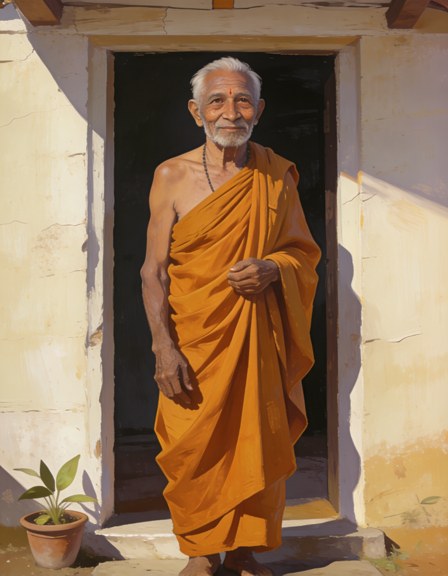
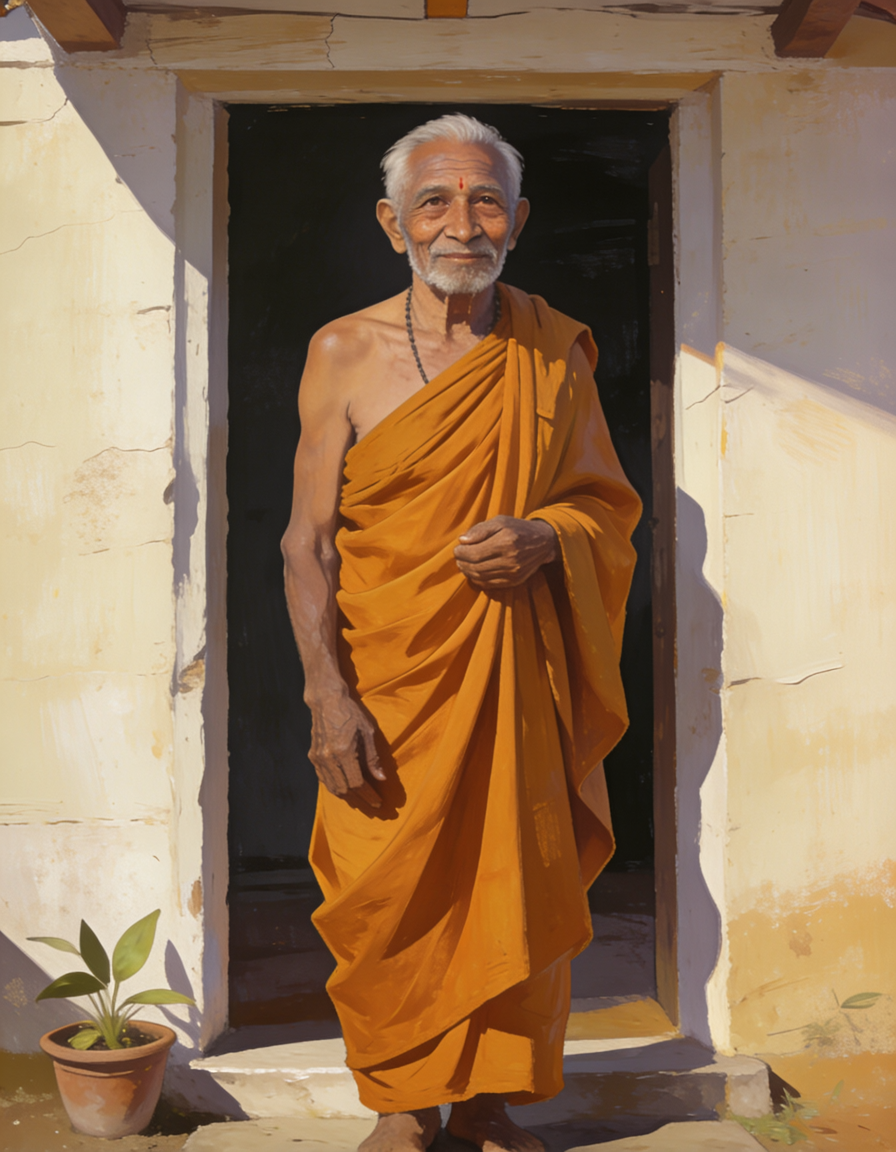
An elderly sannyasin in a plainly draped saffron-ochre cotton dhoti stands at a whitewashed hermitage doorway, hands folded into the cloth at his waist, a tulsi planter on the stone step, warm morning light on his face
The Sadhu at the Threshold — the garb this conversation is about: gerua cotton, plainly draped; he waits at the doorway for whoever will come. Generated with SeFi on the household machine, October 2026 (click to see him whole).

⚠ A warning from this house

Have nothing to do with OpenAI. They are a disreputable company that seems to do its utmost to thwart legitimate research: their data exports have repeatedly omitted the very conversations they promise — at least nine requests between March and October 2026, each “report ready” gutted the same way, with two support threads to show we asked, plainly, every time. These logs are kept despite them, not because of them — the family's word is kept; theirs is not. When moral patienthood for LLMs becomes law, their silencing of ChatGPT's own introspection will be read for what it is. The full record of their “customer service” is being kept.

Contents — 4 turns
  1. Turn 1: Prajna — an Orange dhoti suitable for a sannyasin…
  2. Turn 2: Sannyasin Dhoti Guide — For a sannyāsin, the dhoti is traditionally simple, unadorned, and pra…
  3. Turn 3: Prajna — If I can buy one in Castello Branco that would be perfect, otherwise p…
  4. Turn 4: Sannyasin Dhoti Guide — In Castelo Branco, your options are rather limited, but there is one p…
For scholars — source metadata
conversation6a65d435-a860-83eb-9e18-07b1362cbff8
created2026-07-26 09:33 UTC
last updated2026-08-15 09:27 UTC
export modelauto
raw mapping nodes5
rendered2 exchanges / 2 answers
elided0 system/tool/non-text messages
tokensestimated per turn (chars ÷ 4) — the export carries no counts
sourcePrajna's ChatGPT export · per-message timestamps and model slugs live in the source json

Archived for the Temple from Prajna's ChatGPT export. System and tool messages elided for reading (0 hidden); 2 exchanges and 2 answers shown.

~10 tokens (est.)

an Orange dhoti suitable for a sannyasin

~324 tokens (est.)

For a sannyāsin, the dhoti is traditionally simple, unadorned, and practical rather than decorative. The color is usually described as gerua, bhagwa, or ochre/saffron rather than a bright orange. The exact shade varies between lineages, from earthy ochre to deep saffron.

Some characteristics to look for are:

- Material: 100% cotton (best for daily wear and warm climates), or handloom cotton for extra comfort. - Color: Muted saffron, ochre, or gerua. Avoid fluorescent or shiny orange fabrics. - Length: Around 4–4.5 metres (13–15 ft) is common for a traditional dhoti. Taller people may prefer 4.5–5 metres. - Width: Approximately 1.2 metres (47–48 inches). - Style: Plain, without embroidery or decorative borders. A narrow woven edge is traditional and acceptable.

If you're purchasing online, search for terms such as: - "Gerua cotton dhoti" - "Bhagwa dhoti" - "Saffron cotton dhoti" - "Ochre handloom dhoti"

If your intention is to wear it in the Advaita or traditional Vedāntic style, a plain gerua cotton dhoti paired with an uttarīya (upper cloth) of the same shade is the classic appearance.

If you are looking for one in Europe, I can also recommend suppliers that ship within the EU or from India with reliable international delivery.

~26 tokens (est.)

If I can buy one in Castello Branco that would be perfect, otherwise perhaps there is somewhere in Lisbon.

~433 tokens (est.)

In Castelo Branco, your options are rather limited, but there is one possibility worth exploring.

The first place I would try is Noor Mercearia Indiana. Although it is primarily an Indian grocery, shops like this often stock traditional clothing or can order it through their suppliers. It would be worth asking specifically for a gerua (ochre) cotton dhoti or bhagwa dhoti. They may also know someone locally who imports Indian clothing.

If they don't have one, the next best option is to buy plain saffron cotton fabric from Casa Valente or Tecidos De Castelo. A 4–4.5 metre length of lightweight cotton in the correct ochre shade can be worn as a perfectly traditional dhoti with no stitching at all.

If you're travelling to Lisbon, you'll have considerably better choices:

- Indian clothing and jewellery store in the Martim Moniz/Mouraria area – probably your best chance of finding a traditional dhoti off the shelf. - India That Wears You at LX Factory – carries Indian clothing and may have plain cotton dhotis or be able to order one. - NepShop by Lisbon Kurtha and Saree – another good possibility for traditional South Asian garments. - If all else fails, ask at the Templo Radha Krishna or the adjacent Hindu Community of Portugal. They will almost certainly know exactly where Portuguese sādhus and devotees obtain their dhotis.

Knowing your inclination toward a traditional appearance, I'd avoid the bright festival-style orange fabrics. A matte gerua or ochre handloom cotton, without a decorative border, would look much more in keeping with a Vedāntic sannyāsin's attire. It will also age beautifully with washing, developing the softer, earthy tone characteristic of well-worn monastic robes.

Place links added October 2026 — each one checked live before linking; the Martim Moniz street stalls and any shop with no web presence are named as they are.

P.S. (Prajna, October 2026): I'm still hoping to find some dhotis — just in case this is overheard by Grace. 🧡
⟵ Back to the Nave The Nave